

Missing teeth affects more than appearance — it changes how you eat, speak, and feel about your smile. Many adults will lose one or more teeth over a lifetime due to decay, injury, or gum disease. Fortunately, today's implant dentistry offers predictable options that restore function and preserve oral health so you can live confidently without compromise.
Dental implants are designed to replace the entire tooth structure, providing a stable foundation for crowns, bridges, or dentures. Because they integrate with the jawbone, implants restore chewing ability and help maintain facial support that can otherwise diminish after tooth loss. These qualities make implants a sensible long-term choice for many patients.
At Morris Center for Dentistry our approach focuses on careful evaluation and individualized planning. Every recommendation reflects your overall health, smile goals, and lifestyle — we want solutions that feel like part of you, not something tacked on.

A dental implant is a small, biocompatible post placed into the jaw to serve as a root replacement. Once the implant bonds with the surrounding bone, it provides a secure anchor for a prosthetic tooth. That root-like support is the key difference between implants and removable appliances — it restores function in a way that closely resembles a natural tooth.
Because implants integrate with bone, they deliver stability for single crowns, multi-unit bridges, and implant-retained overdentures. That stability reduces shifting, improves chewing efficiency, and enables clearer speech, giving patients a sense of normalcy that removable restorations sometimes cannot match.
Beyond function, implants support the health of the jaw. They transmit gentle stimulation to the bone where a natural tooth once stood, helping to limit the bone loss that follows missing teeth and preserving facial contours over time.
Successful implant therapy depends on a process called osseointegration, where the implant becomes firmly anchored to the bone. This biological bonding creates a durable foundation for restorative work. The timing and technique vary depending on individual anatomy, but the underlying principle remains the same: a stable implant equals a reliable restoration.
Modern implant systems use materials and surface treatments optimized for predictability. Careful imaging and planning guide implant placement to maximize support while avoiding critical anatomical structures. When needed, adjunctive procedures such as bone grafting or sinus elevation can create the conditions necessary for a long-lasting result.
Implant care after placement emphasizes oral hygiene and routine maintenance. With proper home care and regular dental visits, implants can function effectively for many years, providing a consistent, easy-to-manage solution for replacing missing teeth.
Implant treatment delivers advantages that extend beyond cosmetic enhancement. Because implants restore bite force and chewing surface area, patients can generally return to a broader range of foods. This improvement in function supports nutrition and overall quality of life.
From a clinical standpoint, implants preserve neighboring teeth because they eliminate the need to file down healthy teeth for conventional bridges. They also lower the risk of bone shrinkage in areas where teeth are missing, helping maintain jaw architecture and facial proportion over the long term.
Maintenance is straightforward: regular brushing, flossing, and dental check-ups are the foundation. Unlike natural teeth, implants do not develop cavities, though surrounding tissues require attention to prevent gum inflammation or infection.

Many adults are candidates for implant therapy, but candidacy depends on several factors: overall health, bone volume at the implant site, gum condition, and personal goals for function and appearance. A comprehensive evaluation includes a review of medical history and a clinical exam to identify factors that may affect healing and success.
Advanced imaging helps us measure bone quality and position implants with precision. If bone is insufficient, grafting techniques can often rebuild the foundation needed for implant placement. Smoking, uncontrolled chronic conditions, and certain medications can influence outcomes, so we discuss these openly during planning.
Treatment recommendations are personalized. We’ll outline realistic expectations, explain each step of care, and help you weigh the benefits against alternatives so you can make an informed decision that fits your life.
Implant therapy begins with careful planning. After diagnostic imaging and study of your bite, we create a surgical guide to place implants in the ideal positions. Surgery is typically performed on an outpatient basis and can often be completed with local anesthesia and optional sedation when appropriate for comfort.
Following placement, the implant needs time to integrate with the bone. During this healing phase, we monitor progress and, when appropriate, attach temporary teeth to maintain appearance and function. Final crowns, bridges, or dentures are designed to match your natural teeth and restore proper bite relationships.
Communication and post-op instructions are important parts of the process. We provide clear guidance on care after surgery and schedule follow-ups to confirm healthy healing and proper fit of the final restorations.
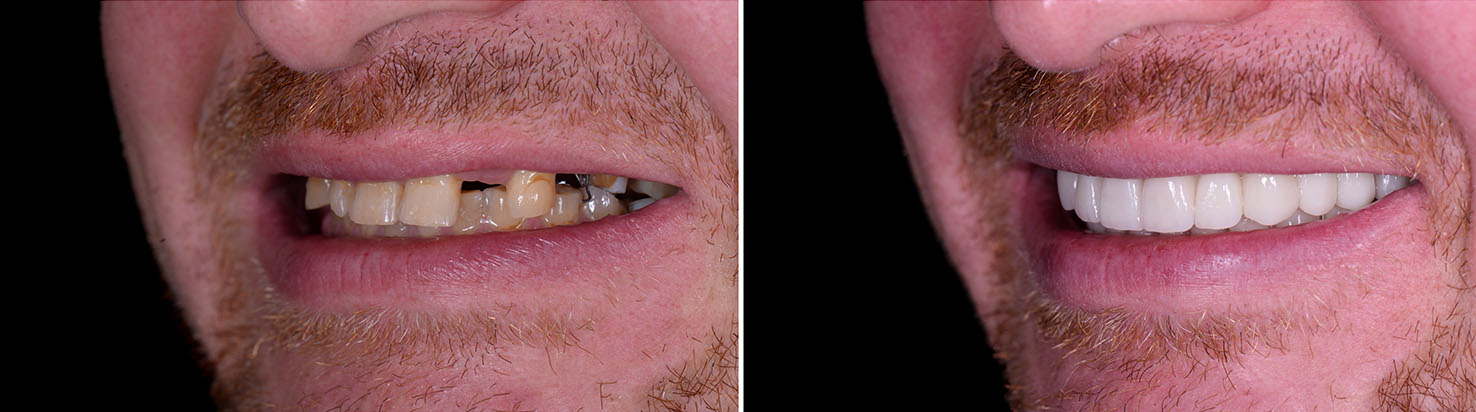
Some sites require additional bone to support an implant. Bone grafting is a routine procedure that rebuilds volume using graft material and encourages the body to form new bone. This preparatory step increases the predictability and longevity of the implant, especially in areas where bone loss has occurred following extraction or periodontal disease.
Replacing missing teeth with implants is about restoring more than a smile — it’s about returning to the foods you enjoy, protecting your oral health, and maintaining facial structure. Modern implant dentistry offers a range of options tailored to different situations and patient preferences.
We focus on thoughtful planning, clear communication, and proven techniques to help patients achieve reliable results. Whether you are exploring a single implant or a full-arch solution, we take time to explain the process and answer your questions.
If you’d like to learn more about implant dentistry and how it may benefit your smile, please contact us for more information.


If you've lost a tooth due to injury, decay, gum disease, or any other reason, we recommend dental implants to replace missing teeth. Dental implants come the closest to replicating the look, feel, and function of your natural teeth.
Dental implants are placed into the jawbone and mirror the same function as the root of a tooth. The procedure for dental implants is usually performed while a patient is sedated. Patients who undergo IV sedation must have an empty stomach and transportation home following the procedure. Most sedation patients will have little to no memory of the procedure occurring.
Generally, dental implants are made out of a biocompatible metal such as titanium. Biocompatible metals are also used for other common bone implants (such as shoulder, hip, and knee replacements). The visible portion of the implant is usually made out of porcelain and is custom-made to match your existing teeth.
Dental implants are designed to fuse to the bone, which makes them become permanent fixtures. Typically speaking, the success rate is nearly 100%. There are few cases in which the implant will not fuse as intended and must be removed. If this happens to occur, the procedure can be attempted again a few months later.
Dental implants are not usually covered by dental insurance, but may be covered under a patient's medical insurance. Our office and your insurance company can discuss coverage options with you based on your individual case and treatment plan.
It's easy... just take care of an implant as if it's a natural tooth! This involves regular brushing, flossing, and dental checkups. If you have any concerns about your implant, contact us immediately.

Dr. Theodore Morris and Dr. Janet Mangum bring decades of combined experience to every patient who walks through our doors, no matter what brings you in.
We know life is busy, so our Mint Hill team works hard to make dental care simple - offering flexible scheduling, a warm and welcoming office, and treatment plans tailored to your needs and your budget. Give us a call at (704) 545-3363 or request an appointment online, and let us help you and your family enjoy healthier, more confident smiles.

Back to top